

Zillion
industries
See how we build scalable web and mobile applications tailored to industry-specific challenges.
 
Thinking Breakthroughs
Latest Blogs
How to Make Your Website DPDP Compliant: A Step-by-Step Guide
Zillion IT Solution
14 Jul 2026
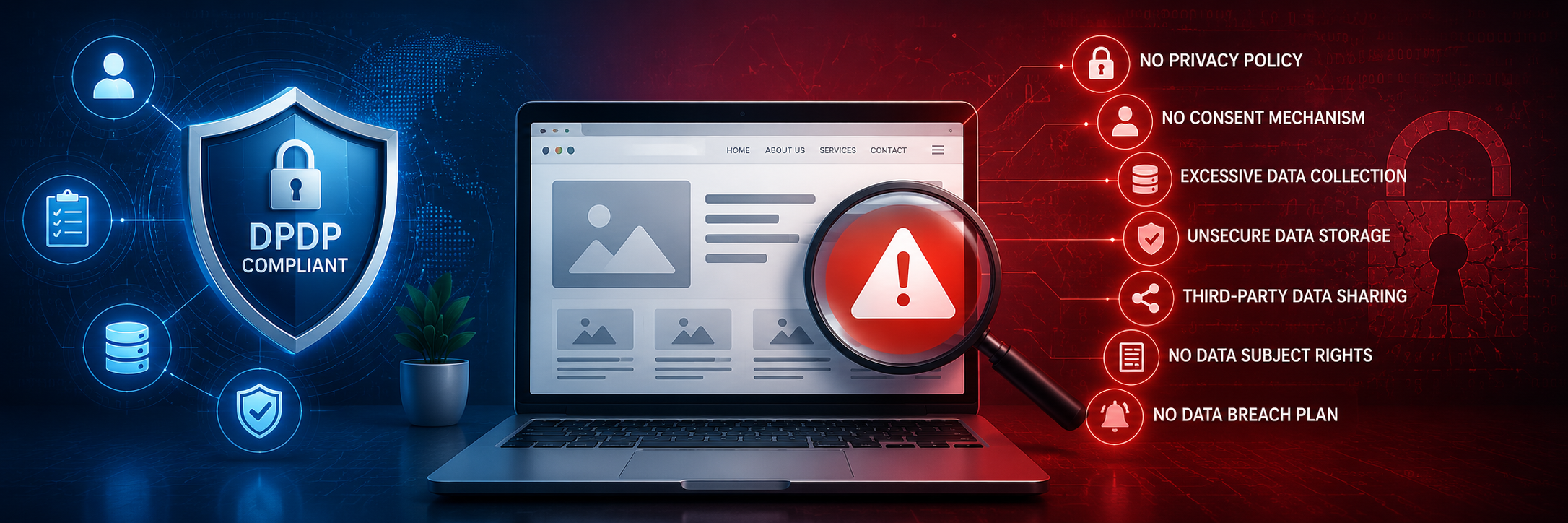
Is Your Website DPDP Compliant? 7 Warning Signs It's Not
Zillion IT Solutions
11 Jul 2026
Casestudies

Retail Management Software Solutions

Content Management System and Payroll Module Integration

Digital Learning Software Solutions

Revolutionizing E-Learning: A Case Study on Digital Transformation

Retail Management Software Solutions

Digital Transformation of an Education Hub

Social Media Digital App Solutions

Community Matrimony App

Dedicated Offshore Team

PHP Developers
PHP Developers

Effortless Project Handling

Wordpress Developers

Scale Your Team with Confidence

Java Developers
Java Developers

Build next-gen Java applications

Laravel Developers
Laravel Developers

Seamless Project Execution

Node JS Developers
Node JS Developers

Efficient Project Handling

Insights and Stories
From Our Blog
Latest Blog
Zillion IT Solution
14 Jul 2026
Latest Blog
Zillion IT Solutions
11 Jul 2026
About
Zillion IT Solutions
Get to know Zillion, where innovative web and mobile solutions meet great talent.
Career
Join our team and help create impactful web and mobile solutions.
Clients
Discover the success stories of our clients powered by innovative digital solutions.
talk to us
Build Powerful Web & Mobile Experiences
We turn ideas into high-performing web and mobile apps with modern tech and intuitive UX.
 
 
DPDP Compliance

Blog Image

How to Make Your Website DPDP Compliant: A Step-by-Step Guide

If you've been putting off DPDP compliance because it feels like a legal problem rather than a development one, that assumption is costing you time you don't have. The Digital Personal Data Protection Act, 2023 is already in force. The Ministry of Electronics and Information Technology notified the DPDP Rules on 13 November 2025, and the compliance timeline is now running in phases through 13 May 2027, when the full substantive obligations—consent, notice, data security, and erasure requirements—come into effect. Businesses that wait until the deadline is close will be racing against a queue of developers, auditors, and legal consultants all trying to fix the same problem at once.

The good news: DPDP compliance for a website isn't a mystery. It's a defined, buildable process. Here's what it actually takes, step by step.

Step 1: Audit Every Data Touchpoint on Your Website

Before you fix anything, you need to know what you're fixing. Go through every form, chatbot, login flow, newsletter signup, and payment gateway on your site and document what personal data each one collects, why it's collected, where it's stored, and which third-party tools (analytics, CRMs, marketing platforms) receive a copy of it. Most businesses are surprised by how many integrations have quietly accumulated access to user data over the years. This audit becomes your baseline—you can't build a compliance plan around data flows you haven't mapped.

Step 2: Classify Your Data and Apply Minimization

Once you know what you're collecting, ask a harder question: do you actually need all of it? The DPDP Act is built on the principle of purpose limitation—collecting only what's necessary for a clearly stated purpose. If your contact form asks for a date of birth you'll never use, or your checkout page stores data indefinitely with no retention limit, that's excess exposure with no business justification. Trim every field that isn't essential, and set clear retention periods for what remains.

Step 3: Rebuild Your Consent Mechanism Properly

This is where most websites fail quietly. A cookie banner with only an "Accept" button, or consent buried in a wall of text nobody reads, doesn't meet the Act's standard. Valid consent under DPDP must be free, specific, informed, and given through a clear affirmative action—and it must be as easy to withdraw as it was to give. Practically, this means:

  • A consent interface that lets users approve or decline by purpose, not as an all-or-nothing bundle
  • A visible, accessible way to withdraw consent at any time
  • Consent records that are logged and time-stamped, so you can prove compliance if asked

If you're planning to eventually use a registered Consent Manager, note that the DPDP Rules bring these provisions into effect around November 2026—so this is a good area to design flexibly now rather than rebuild later.

Step 4: Rewrite Your Privacy Notice in Plain Language

Your privacy policy needs to function as a notice, not just a legal disclaimer. It should clearly state what data is collected, the specific purpose for each category, how long it's retained, and how users can exercise their rights. Skip the dense legal boilerplate. The Act expects notices that a Data Principal can genuinely read and understand—not a document written to survive a lawsuit rather than inform a user.

Step 5: Build in Data Principal Rights as Real Features, Not Manual Processes

Users have the right to access their data, request corrections, and ask for erasure. If your only way of handling this is "someone checks their inbox and manually searches the database," you won't be able to keep up once user awareness grows—and it will. Build a simple self-service mechanism, even a basic one: a request form connected to a defined internal workflow with a response timeline. This doesn't need to be elaborate at first, but it does need to exist and function reliably.

Step 6: Put Real Security Safeguards in Place

This is the step with the highest financial stakes—failing to implement "reasonable security safeguards" carries the single largest penalty in the Act, up to ₹250 crore. At minimum, this means:

  • Encryption for personal data, both at rest and in transit
  • Role-based access controls so only authorized personnel can view sensitive data
  • Secure API and database architecture, not default or shared credentials
  • Activity logging so you can trace who accessed what, and when
     

None of this is exotic. It's the security hygiene most modern websites should already have—DPDP just makes it a legal requirement rather than a best practice.

Step 7: Create a Breach Response Plan Before You Need One

The DPDP Rules require reporting a personal data breach to the Board and to affected individuals within 72 hours of becoming aware of it. That's a tight window if you're improvising in the moment. Document a clear internal process: how a breach gets detected, who gets notified internally, who drafts the report, and what information goes to affected users. Run through it once with your team so it's not being tested for the first time during an actual incident.

Step 8: Handle Children's Data with Extra Care

If any part of your website could reasonably be used by someone under 18, you need verifiable parental or guardian consent before processing their data, along with restrictions on tracking or behavioral monitoring of minors. This is one of the more heavily scrutinized areas of the Act, with penalties up to ₹200 crore for non-compliance—worth getting right the first time rather than retrofitting later.

Step 9: Monitor and Update as Regulations Evolve

DPDP compliance isn't a one-time build. The Rules are still rolling out in phases, and guidance will continue to be refined as the Data Protection Board becomes fully operational. Assign ownership internally—even if it's one person coordinating between your legal and development teams—so that new features, forms, or third-party integrations get checked against compliance requirements before they go live, not after.

Where to Start If This Feels Overwhelming

You don't need to fix all nine steps simultaneously. Start with the audit—you can't prioritize what you haven't mapped—then tackle consent and security in parallel, since those carry the highest penalty exposure. Everything else can follow in a structured sequence.

Zillion IT Solutions builds and upgrades websites with DPDP compliance handled end-to-end—from the initial data audit to consent architecture, secure development, and breach response systems. Talk to our DPDP compliance experts to get a clear roadmap for your website.

zillion

New Things Will Always
Update Regularly

zillion