

For years, web application development followed a familiar pattern.
- Define the features.
- Design the screens.
- Build the database.
- Connect the APIs.
- Test the application.
- Deploy it.
Data privacy often entered the conversation somewhere along the way — usually when someone asked about security, compliance or documentation.
India’s Digital Personal Data Protection framework is changing that sequence.
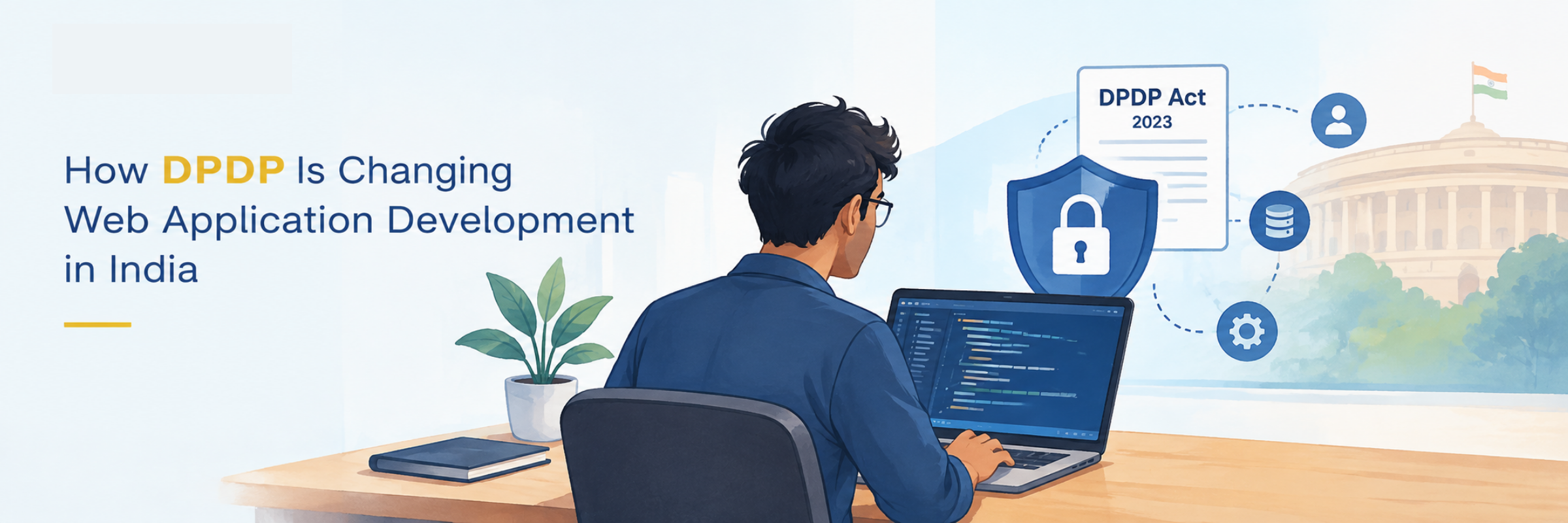
With the Digital Personal Data Protection Act, 2023 and the Digital Personal Data Protection Rules, 2025, privacy is increasingly becoming something that needs to be considered while the application is being designed and engineered, not added after the product is finished.
And that creates a significant shift for anyone building digital products in India.
Whether you are a business developing a new customer platform, an enterprise modernising an existing application, or a technology company looking for an experienced engineering team to deliver a project for your client, the question is becoming the same:
Where does personal data enter the application, what happens to it, and how can the system control its entire lifecycle?
DPDP Is Turning Data Into an Architecture Question
Think about a typical web application.
A customer creates an account.
They provide a name, mobile number and email address. They may upload documents. Their activity is recorded. Information moves through APIs. Data reaches databases, analytics platforms, CRM systems, notification services and third-party integrations.
The application may appear to have only a few forms and screens.
Behind those screens, however, is a complete data journey.
The DPDP framework makes that journey much more important.
The Act covers the processing of digital personal data, while the Rules provide more detailed operational requirements around areas such as notices, consent mechanisms and security safeguards.
For developers, this means privacy cannot simply be treated as a legal document sitting outside the application.
It has to influence how the application works.
It Starts With What the Application Collects
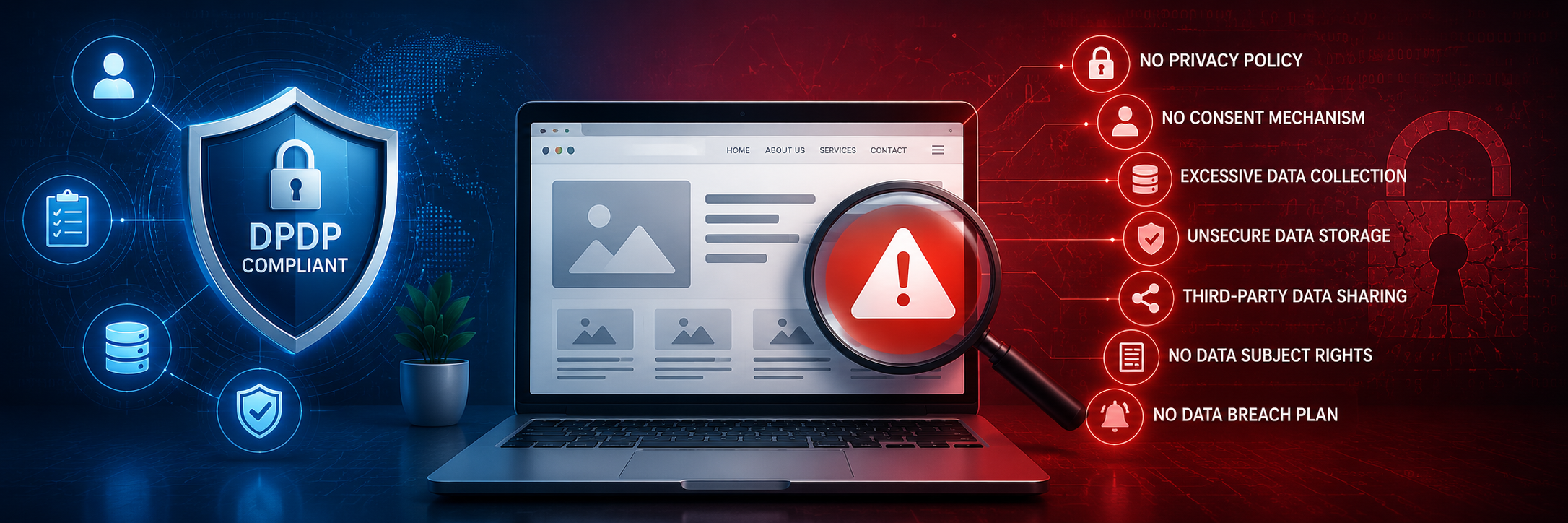
One of the easiest ways to create unnecessary privacy complexity is to collect data simply because the application might need it someday.
- A registration form asks for ten fields when only four are actually required.
- A customer profile stores information that no feature uses.
- An analytics system receives more user information than it needs.
Over time, these decisions create unnecessary data stores, unnecessary access points and unnecessary retention obligations.
The DPDP Rules require notices to provide an itemised description of the personal data being collected and the purpose for processing it.
That has a direct implication for application design.
Developers and product teams need to ask: What data does this feature actually require?
The answer can influence database design, form fields, APIs, permissions and integrations from the beginning.
Consent Can No Longer Be Just a Checkbox
A checkbox saying “I agree” may look simple from a user-interface perspective.
But a privacy-aware application needs to think beyond the checkbox.
- What exactly was the user informed about?
- What data is being collected?
- For what purpose?
- Can consent be withdrawn?
- What happens inside the system after withdrawal?
The Rules describe requirements around clear, standalone notices and mechanisms that allow Data Principals to withdraw consent and exercise their rights.
That means consent-related functionality may need to connect with actual application workflows.
For example, withdrawing consent should not become a dead-end button that changes nothing in the underlying system.
The application architecture needs to understand what that action means.
Your Database Needs to Understand the Data
Traditional application databases are generally designed around business functionality.
- Customers.
- Orders.
- Invoices.
- Appointments.
- Transactions.
A privacy-aware architecture needs another layer of thinking:
Which fields contain personal data?
That information can influence:
- Database schemas
- Data classification
- Access permissions
- Encryption requirements
- Retention periods
- Audit records
- Deletion workflows
- Backup considerations
- Data-sharing mechanisms
This is where privacy starts moving from policy into engineering.
The database does not need to become a legal document.
But the development team needs to know enough about the data to build appropriate controls around it.
APIs Become Part of the Privacy Conversation
Modern web applications rarely operate alone.
They connect with payment gateways, CRM systems, ERP platforms, analytics tools, communication services, identity providers and other third-party systems.
Every integration can create another path through which personal data moves.
That makes API architecture increasingly important.
Developers need to consider questions such as:
- What data does this API receive?
- What data does it return?
- Who can call it?
- Is all the returned data actually necessary?
- Where does the information go next?
A well-designed API should not expose more personal data than the consuming application or user actually needs.
Privacy therefore becomes part of API design, authentication, authorisation and integration architecture.
Security Has to Be Built Into the Application
The DPDP Rules describe reasonable security safeguards including measures such as encryption, access controls, monitoring and logging mechanisms, among others.
For development teams, this reinforces an important principle:
- Security cannot be treated as a final testing activity.
- It needs to appear throughout the development lifecycle.
- Authentication controls.
- Role-based access.
- API protection.
- Secure database configuration.
- Encryption.
- Monitoring.
- Logging.
- Vulnerability management.
- Incident-related controls.
These are engineering decisions, not merely compliance paperwork.
The exact controls required will depend on the application, data, architecture and applicable obligations. But the direction is clear: protecting personal data requires technical safeguards within the systems that process it.
Deletion Is Also a Development Feature
There is another area that can easily be overlooked.
Deletion.
A business may have a process for deleting customer information. But can the software actually execute that process correctly?
Consider a user's data spread across:
- Primary databases
- Application tables
- Search indexes
- Analytics systems
- File storage
- Third-party integrations
- Logs
- Backups
Deleting one database record does not necessarily mean the data has disappeared from the entire technology environment.
This is why data lifecycle thinking matters.
Applications increasingly need clearly designed retention and deletion workflows rather than relying on manual database operations whenever information needs to be removed.
DPDP Changes the Development Lifecycle
The biggest change may not be a particular feature.
It is the timing of the conversation.
Instead of asking: “Is this application compliant?”
towards the end of development, teams can start asking:
“How should we design this application so that privacy requirements are considered from the beginning?”
That changes the development lifecycle.
1. Before development
Map the personal data the application will collect, process, store and share.
2. During architecture
Define appropriate data flows, access controls, APIs, storage mechanisms and integration boundaries.
3. During development
Build consent, permissions, security and data lifecycle functionality into the application.
4. During testing
Test whether personal data can be accessed, exposed, retained or deleted incorrectly.
5. Before deployment
Review the application against the intended data-processing model and operational requirements.
The result is not simply a more compliant application.
It is a better-understood application.
What Businesses Should Ask Before Building
If you are planning a new web application or modernising an existing one, DPDP should trigger a different set of technology questions.
Ask your development team:
- What personal data will the application collect?
- Why does each feature need it?
- Where will the data be stored?
- Which APIs and third parties will receive it?
- Who can access it?
- How will consent-related actions affect the application?
- How will data be retained and deleted?
- Can the architecture support future privacy requirements without major redevelopment?
These questions are useful whether you are commissioning software directly or managing a technology project for your own client.
The Opportunity for Technology Partners
There is another side to this shift.
Agencies, consultants, technology providers and IT companies increasingly find themselves managing projects that require deeper application engineering capability.
They may understand the client requirement, manage the relationship and define the solution — but still need an experienced development team to handle architecture, coding, integration, testing and deployment.
That is where an engineering partner can extend delivery capability without changing the underlying client relationship.
For such projects, DPDP-ready development is not a separate technology category.
It becomes part of building the web application correctly.
A technology partner can bring the business requirement and client context.
The engineering team can bring application architecture, development, integrations, testing and implementation expertise.
Together, the project can move from requirement to production without treating privacy as an afterthought.
The Bigger Shift: Privacy by Design Becomes Engineering by Design
DPDP is not simply creating another checklist for web developers.
It is encouraging a more disciplined question:
What should happen to personal data at every stage of the application's lifecycle?
That question reaches into product design, databases, APIs, authentication, integrations, security, retention and deletion.
For businesses, this means choosing development teams that understand the technology implications of data protection.
For technology companies and delivery partners, it means having access to engineering capability that can translate privacy requirements into working application features.
And for developers, it means recognising that privacy is no longer something that sits outside the code.
It is increasingly part of the architecture.
Building a DPDP-Ready Web Application?
Whether you are building a new digital product, modernising an existing application, or looking for an experienced engineering team to extend your delivery capability, Zillion IT Solutions can support the application development journey — from architecture and development to integrations, testing and deployment.
Built on more than two decades of software development experience, Zillion works across modern application technologies with a focus on building practical, scalable software solutions.
The objective is simple: build applications that are designed for the way businesses actually use, manage and protect data.