

Zillion
industries
See how we build scalable web and mobile applications tailored to industry-specific challenges.
 
Thinking Breakthroughs
Latest Blogs
How to Make Your Website DPDP Compliant: A Step-by-Step Guide
Zillion IT Solution
14 Jul 2026
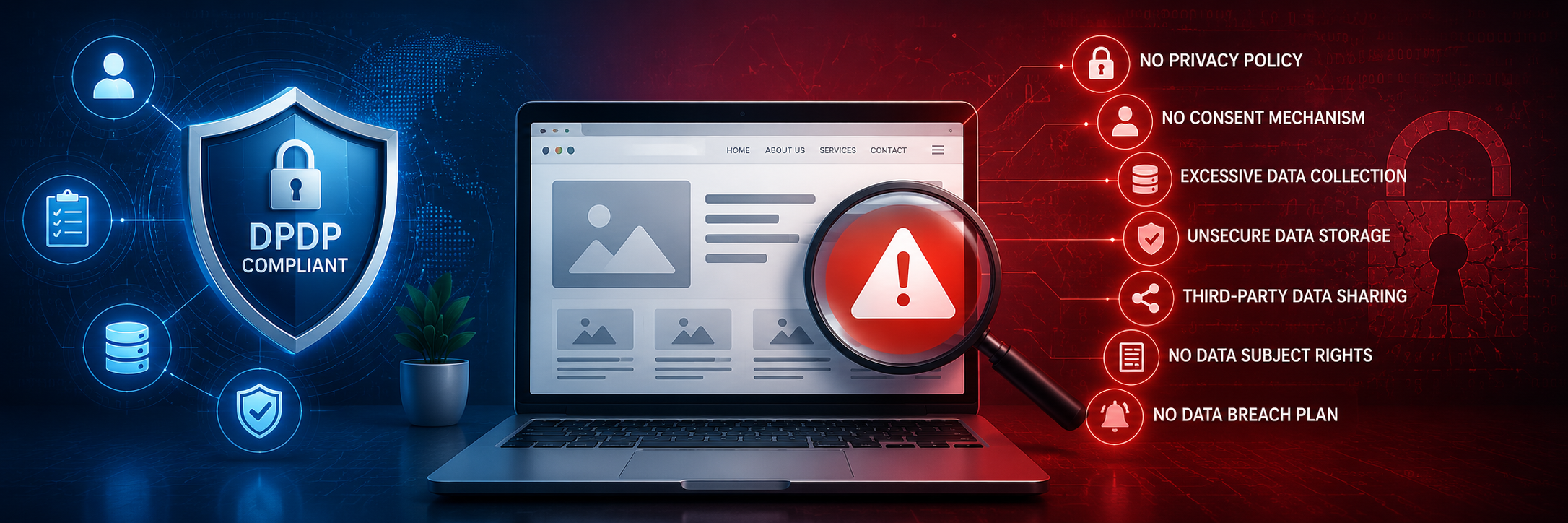
Is Your Website DPDP Compliant? 7 Warning Signs It's Not
Zillion IT Solutions
11 Jul 2026
Casestudies

Retail Management Software Solutions

Content Management System and Payroll Module Integration

Digital Learning Software Solutions

Revolutionizing E-Learning: A Case Study on Digital Transformation

Retail Management Software Solutions

Digital Transformation of an Education Hub

Social Media Digital App Solutions

Community Matrimony App

Dedicated Offshore Team

PHP Developers
PHP Developers

Effortless Project Handling

Wordpress Developers

Scale Your Team with Confidence

Java Developers
Java Developers

Build next-gen Java applications

Laravel Developers
Laravel Developers

Seamless Project Execution

Node JS Developers
Node JS Developers

Efficient Project Handling

Insights and Stories
From Our Blog
Latest Blog
Zillion IT Solution
14 Jul 2026
Latest Blog
Zillion IT Solutions
11 Jul 2026
About
Zillion IT Solutions
Get to know Zillion, where innovative web and mobile solutions meet great talent.
Career
Join our team and help create impactful web and mobile solutions.
Clients
Discover the success stories of our clients powered by innovative digital solutions.
talk to us
Build Powerful Web & Mobile Experiences
We turn ideas into high-performing web and mobile apps with modern tech and intuitive UX.
 
 
DPDP Compliance

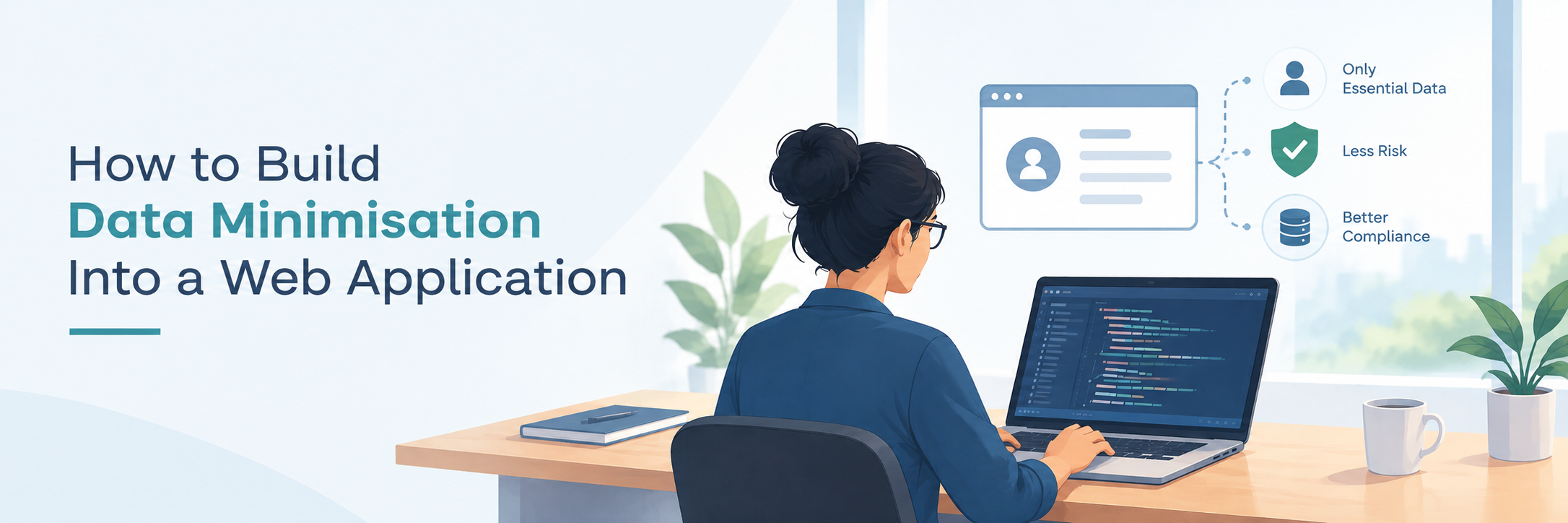
How to Build Data Minimisation Into a Web Application?

Blog Image

How to Build Data Minimisation Into a Web Application

A developer adds a field to a registration form.

It looks harmless.

Name. Email. Phone number. Date of birth. Address. Company. Job title. Preferences.

The database can store it. The API can transmit it. The application can display it.

So why not collect it?

Because every additional piece of personal data creates another responsibility.

It has to be protected. It may need to be accessed. It may flow into other systems. It may appear in logs or analytics. It may need to be retained. And eventually, the application may need to delete it.

This is where data minimisation in software development becomes an engineering principle rather than simply a privacy concept.

The objective is not to build an application that knows as little as possible.

It is to build one that collects, stores, processes and exposes only the data required for a defined business purpose.

That sounds straightforward.

In practice, it can influence almost every layer of a modern web application.

The Data Field That Should Never Have Existed

Consider an e-commerce application.

During checkout, the business needs a customer's name, delivery address and contact information.

Someone proposes collecting the customer's date of birth too.

Perhaps it could be useful for future marketing.

The field gets added.

A few months later, the information is stored in the customer database, copied into the CRM, included in an export and made available through an internal API.

Nobody is using it for the checkout process.

Yet the application now has another piece of personal data to protect and manage.

This is the problem data minimisation tries to prevent.

The best data to protect is often data the application never needed to collect in the first place.

What Does Data Minimisation Mean in Software Development?

At the engineering level, data minimisation means making deliberate decisions about four questions:

  • What should the application collect?
  • What should it store?
  • What should it process or transfer?
  • What should it expose?

These questions are related, but they are not identical.

An application may legitimately collect information for a particular purpose but not need to expose the entire record through every API.

It may need to store a value temporarily but not retain it indefinitely.

It may need to process a field internally without sending it to an external service.

Therefore, data minimisation should be considered throughout the application's data lifecycle.

Step One: Decide What the Application Actually Needs

The first opportunity for minimisation appears before development begins.

Take a feature such as customer registration.

Instead of starting with:

“What information could we collect?”

start with:

“What information does this feature require to work?”

For example, an application might need an email address to create an account and send account-related communications.

  • It may not need a full postal address at registration.
  • It may not need a date of birth.
  • It may not need an employer's name.
  • It may not need a personal identification number.

Those requirements should be determined by the application's actual business function.

This sounds like a product-management decision, but it directly affects engineering.

The requirements become database fields.

The database fields become API parameters.

The API parameters become frontend forms.

And every one of those decisions creates a data footprint.

Required Data and Optional Data Should Not Be Treated the Same

One useful development practice is to distinguish between information that is essential and information that is optional.

Imagine a customer profile containing:

  • Name
  • Email
  • Mobile number
  • Company
  • Job title
  • Communication preferences
  • Date of birth

The application may require the first two fields to create an account.

The others may support additional functionality — or may not be necessary at all.

That distinction should be visible in the application design.

Developers can work with product teams to define:

  • Required fields — essential for the feature.
  • Conditionally required fields — needed only when a particular function is used.
  • Optional fields — genuinely useful but not necessary.
  • Unnecessary fields — information that should not be collected.

The last category is important.

If a field has no clear purpose, removing it is often more effective than creating another control to protect it.

Step Two: Do Not Store Everything You Receive

Data minimisation does not stop at the form.

An application may receive more information than it needs.

Consider an external API returning a customer profile.

The response contains 25 fields.

The application needs four.

A poorly designed integration may store all 25 fields simply because they were available.

A more deliberate implementation maps only the required fields.

For example:

External API → Data mapping → Required application fields

Instead of:

External API → Complete response → Internal database

This small architectural decision can significantly reduce the application's data footprint.

It also makes future data management easier.

Step Three: Minimise What APIs Expose

This is where data minimisation becomes particularly relevant to modern application architecture.

An API might return a complete customer object because it is convenient for developers.

But convenience is not always a good reason to expose information.

Suppose a dashboard only needs:

  • Customer name
  • Account status
  • Last transaction date

There may be no reason for the API response to include:

  • Full address
  • Phone number
  • Internal notes
  • Date of birth
  • Other personal attributes

Returning unnecessary information creates additional exposure.

It also increases the consequences if an API is misused, logged incorrectly or accessed by the wrong application component.

Developers should therefore design API responses around the specific use case, rather than automatically returning the entire database record.

Step Four: Keep Personal Data Out of Places That Do Not Need It

One of the easiest ways for data minimisation to fail is through secondary systems.

The application itself may have reasonable controls.

But personal information can appear in:

  • Application logs
  • Error messages
  • Debugging output
  • Analytics platforms
  • Monitoring systems
  • Search indexes
  • Email notifications
  • Reporting exports

A developer troubleshooting an error might log an entire customer object.

It solves a short-term debugging problem.

But now the customer's personal information may exist inside a logging platform where it was never intended to live.

A better approach is to log what is necessary to diagnose the event without unnecessarily reproducing personal information.

For example:

Instead of logging an entire customer profile, the application may record a transaction identifier, event type and technical status.

The exact implementation will depend on the system and troubleshooting requirements.

The principle remains the same:

Do not move personal data into another system simply because the system can accept it.

Step Five: Minimise Data Between Services

Modern applications are rarely one single system.

A web application may communicate with:

  • CRM software
  • Payment platforms
  • ERP systems
  • Analytics tools
  • Marketing platforms
  • Notification services
  • Identity providers
  • AI services
  • External APIs

Each connection creates a data flow.

And every data flow should have a reason.

Before sending information to another service, developers should ask:

  • Does this system need the data?
  • Which fields does it actually require?
  • Can the integration work with less information?
  • Is the complete customer record really necessary?

For example, a notification service may need an email address.

It may not need the customer's complete profile.

A payment service may need transaction and billing information.

It may not need unrelated customer preferences.

A carefully designed integration passes only what the receiving system requires.

Step Six: Think About Storage, Not Just Collection

A common mistake is to define minimisation only at the point of collection.

But storing unnecessary data creates another problem.

Suppose an application temporarily receives a document to perform a specific operation.

Does it need to keep the document permanently?

Maybe not.

Similarly, a system may generate intermediate information during processing that does not need to become part of the permanent customer record.

This is where application architecture should distinguish between:

Data required for ongoing functionality

and

Data temporarily required to complete a process.

That distinction can influence storage design, retention mechanisms and cleanup workflows.

Step Seven: Build Data Minimisation Into Database Design

Database design is one of the most important areas for implementing minimisation.

Developers should question whether every proposed column has a legitimate application purpose.

Instead of creating a generic customer table containing every conceivable attribute, the architecture can be designed around actual business requirements.

Developers can also consider:

  • Separating sensitive information where appropriate
  • Limiting access to sensitive tables or fields
  • Avoiding unnecessary duplication
  • Controlling data exports
  • Defining retention mechanisms
  • Removing obsolete fields as products evolve

This matters because databases tend to accumulate.

A field created for a feature five years ago can remain indefinitely even after nobody remembers why it exists.

Data minimisation therefore needs to be part of application maintenance too.

Step Eight: Test What the Application Exposes

You cannot confirm data minimisation simply by reviewing the database.

It needs to be tested.

A privacy-aware QA process can examine questions such as:

  • Does the registration form request unnecessary information?
  • Do APIs return fields the user does not need?
  • Can one role access information intended for another?
  • Are personal details appearing in logs?
  • Are unnecessary fields being sent to third-party services?
  • Are exports exposing more information than required?
  • Are deleted or obsolete records still accessible?

This turns data minimisation into something measurable within the development lifecycle.

It also demonstrates why privacy-aware development and software testing need to work together.

A Simple Data Minimisation Decision Framework

For every piece of personal data, developers and product teams can ask five questions.

1. Do we need it?

If the feature can function without it, question whether it should be collected.

2. Why do we need it?

Connect the data to a specific business or application purpose.

3. Do we need all of it?

Perhaps only part of the information is required.

4. Who needs access?

Limit visibility to the application components and users that genuinely require it.

5. How long do we need it?

Avoid turning temporary processing requirements into permanent storage.

These questions can become part of requirements gathering, architecture reviews and development checklists.

Data Minimisation Is Not About Making Software Less Useful

There is a common misconception that privacy controls make applications harder to build.

Sometimes, the opposite is true.

An application that collects less unnecessary information can have:

  • Fewer sensitive fields to secure
  • Fewer unnecessary database relationships
  • Fewer data flows to manage
  • Smaller API responses
  • Lower exposure through integrations
  • Simpler retention and deletion requirements

The objective is not to remove useful data.

It is to remove unnecessary data.

That distinction is critical.

A healthcare application, financial platform and e-commerce system will naturally have very different data requirements.

Data minimisation does not mean every application should collect the same small set of information.

It means each application should be able to explain why it collects what it does.

Data Minimisation Becomes More Important as Applications Connect

The challenge becomes greater as applications become more integrated.

A standalone application may have a relatively simple data flow.

A modern enterprise application may connect dozens of services.

The more systems involved, the easier it becomes for personal information to spread beyond its original purpose.

That is why minimisation should be considered at the architecture level.

For businesses, this means asking development teams not only what the application can do, but how much information it needs to do it.

For agencies, consultants and technology providers delivering projects for clients, it means making data minimisation part of the engineering conversation from the requirements stage.

And for development partners, it means designing systems where data is intentionally collected, stored and exposed rather than automatically propagated across every connected service.

The Best Data Footprint Is the One You Intentionally Designed

A web application will always need data.

The goal is not to eliminate it.

The goal is to eliminate the unnecessary parts.

  • Every field should have a reason.
  • Every stored value should have a purpose.
  • Every API response should expose only what is needed.
  • Every integration should receive only what it requires.
  • Every retained record should have a reason to remain.

That is what data minimisation in software development looks like when translated into engineering practice.

It begins with a simple question:

Do we really need this data?

And the quality of the application often depends on being willing to ask that question before the data enters the system — not after it has already spread across the architecture.


Building a Data-Minimised Web Application?

Whether you are developing a new application, modernising an existing platform or delivering software for a client, Zillion IT Solutions can help translate data requirements into practical application architecture.

From database design and API development to integrations, access controls, testing and data lifecycle management, the focus is on building software where personal data is deliberately handled rather than unnecessarily collected and exposed.

Because good software engineering is not only about what an application can store. It is also about knowing what it should never need to store.


zillion

New Things Will Always
Update Regularly

zillion